Floating Shelves vs Built-In Cabinets: The Short Answer
Floating shelves are open shelves fixed to the wall with hidden brackets, so they look light and are great for display. Built-in cabinets are made-to-measure units with doors and drawers that hide your belongings and carry far more weight. The right choice depends on what you need to store, how much weight it must carry and the look you want. We're Durban carpenters with 25 years of experience building both, and we often combine them. See our custom cupboard and carpentry services for everything we build.
Choose floating shelves if you want a light, open look, display space and a lower cost, and you only need to store light items.
Choose built-in cabinets if you need to hide clutter, store heavy or bulky items, or use the full height and width of the wall.
Choose both if you want hidden storage below and display shelves above. It is the most popular solution we build.
Here are a few of our projects that show the difference:
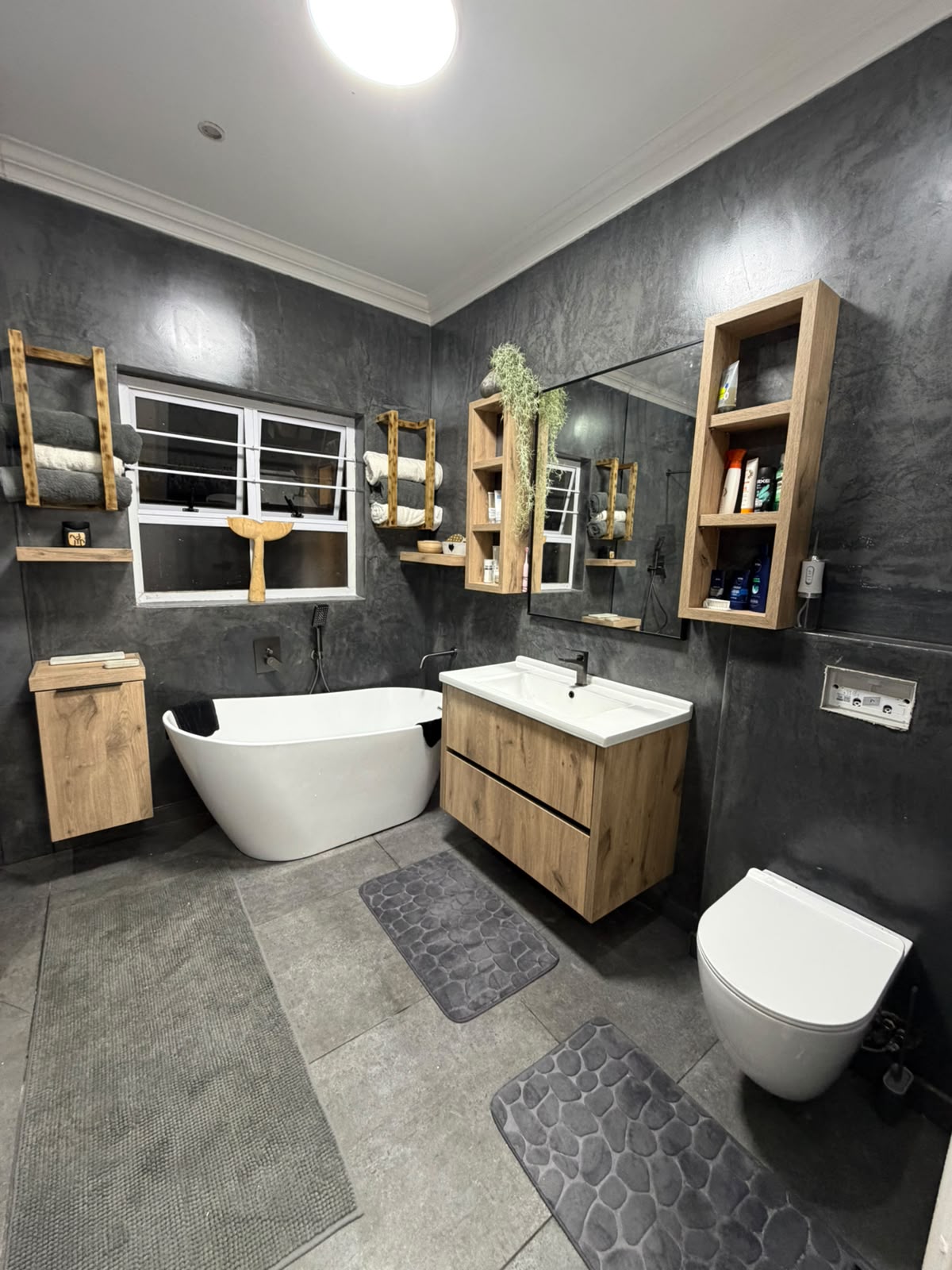
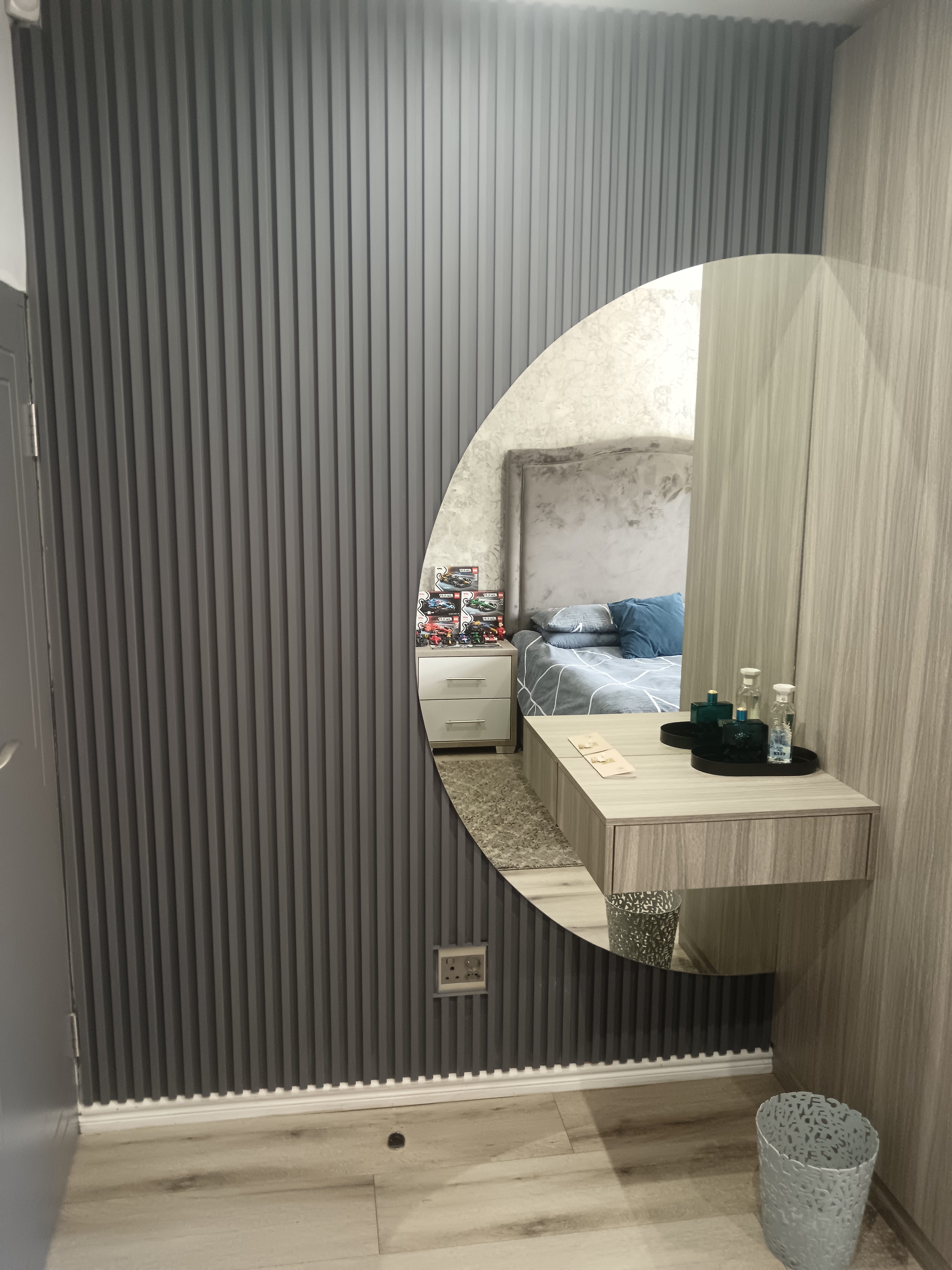
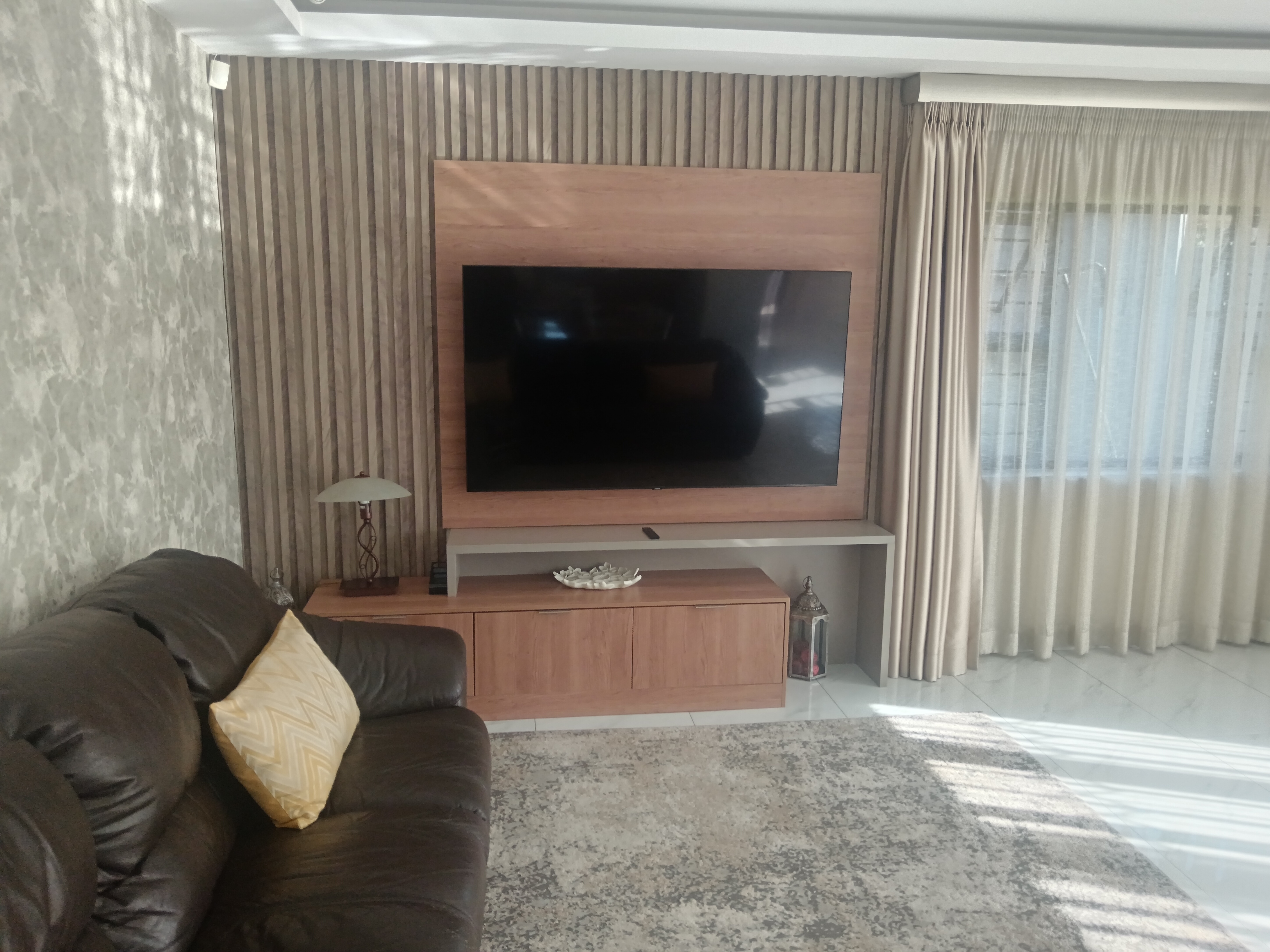
Tap a photo for the full project, or browse our full portfolio.
Floating Shelves vs Built-In Cabinets: Side by Side
| Feature | Floating shelves | Built-in cabinets |
|---|---|---|
| Look | Light, open, modern | Solid, finished, made-to-measure |
| Storage | Open display, light items | Concealed, high capacity |
| Weight capacity | Limited by wall and fixings | High, carried by the unit |
| Hides clutter | No | Yes, with doors and drawers |
| Cleaning | Dust shows, easy to wipe | Dust stays hidden inside |
| Cost | R1,500 – R6,000 | R8,000 – R50,000+ |
| Flexibility | Easy to move or remove | Fixed in place |
| Best for | Display, books, decor | Everyday storage, bulky items |
Which Works Best in Each Room?
Kitchen
Built-in cabinets do the heavy lifting because they hide crockery, pots and appliances. A short run of floating shelves adds a lighter, personal touch, but grease and dust collect on open shelves, so use them sparingly. For a full kitchen plan, see our 2026 luxury kitchen design trends and our kitchen cupboard cost guide.
Lounge and TV area
A wall-mounted TV unit with closed storage below and floating shelves above is a classic combination. See our TV unit and lounge projects and the lounge cupboard cost guide.
Bedroom
Built-in wardrobes handle clothes, while floating shelves beside the bed or above a desk hold books and display items. Our bedroom cupboard cost guide covers the pricing.
Bathroom
A moisture-suited vanity with closed storage handles daily toiletries, while concealed floating shelves add display space without crowding the room. Our Ballito bathroom combines a double vanity with concealed floating shelves, and the bathroom vanity cost guide explains pricing.
Home office and library
For a real book collection, built-in bookshelves are safer and carry more weight. Floating shelves work well for a few favourite books and decor. See our guide to library office built-in bookshelves.
Laundry
Closed cupboards keep detergents and linen tidy and out of sight, with a floating shelf or two for everyday items. Read our guide to laundry room organization.
Design Principles for Both
- Plan around what you store: list the items first, then choose the solution. Heavy, bulky or messy items belong in cabinets, while attractive items belong on shelves.
- Mix open and closed: about two-thirds closed storage and one-third open display looks balanced and stays practical.
- Respect the wall: floating shelves are only as strong as their fixings. Solid brick and concrete are easy, while drywall and partition walls need studs or reinforced fixing points.
- Think about shelf depth and thickness: about 200 to 300 mm deep suits books and decor, and a thicker boxed shelf with a hidden steel bracket looks more substantial and is stronger than a thin board.
- Add lighting: concealed LED strips make both shelves and cabinets look finished.
- Match finishes: using the same board and colour for shelves and cabinets makes a hybrid look intentional.
Materials for Durban's Humid Climate
Both options need to cope with Durban's humidity, so sealed edges and moisture-suited finishes matter.
- Melamine: the most affordable, durable and easy to wipe clean. Works well when edges are sealed.
- Superwood (painted): a smooth painted finish at a mid to high price, ideal for feature shelves and colour-led rooms.
- Melaply: stronger and more durable, a good choice for heavy-use cabinets and long shelves, at a higher cost.
- Solid wood: beautiful and warm, but the most expensive and it needs more care in humid conditions.
- Hardware: quality hinges, runners and hidden brackets are worth paying for because they do the real work.
Not sure which board suits your budget? Read our comparisons of superwood vs melamine vs melaply and MDF vs plywood, or our guide to sustainable materials for custom furniture in Durban.
Costs and Timeline in Durban
Price depends on size, board, hardware and extras such as lighting. Here is a realistic guide for 2026:
| Option | What's included | Typical cost |
|---|---|---|
| Custom floating shelves | Set of two to three shelves, hidden brackets, installed | R1,500 – R6,000 |
| Small built-in cabinet | Single unit with doors or drawers, simple finish | R8,000 – R20,000 |
| Full-wall built-in cabinets | Wall of cupboards with internal fittings | R20,000 – R50,000 |
| Hybrid: cabinets plus floating shelves | Closed storage below, display shelves above | R15,000 – R40,000 |
These ranges cover materials, labour and installation. Always ask for an itemised quote so you can see what is included, such as hardware, lighting and the removal of old units.
Timeline: floating shelves are usually quicker, often within a week or two. Most built-in cabinet projects take around two weeks from consultation to installation. Your units are manufactured in our Durban workshop, so installation in your home is fast and tidy. We confirm the timeline in your quote.
How We Build Yours
Step 1: Consultation and measurement
We discuss what you want to store, your style and budget, then measure precisely and check your wall type. Photos on WhatsApp are enough to start. See how to measure for built-in cupboards for what to send.
Step 2: Design and quote
We design the layout, confirm boards, finishes and fixings, and send a detailed quote and timeline.
Step 3: Workshop manufacturing
Your units are cut, assembled and finished in our Durban workshop with quality checks along the way.
Step 4: Installation
We fix everything securely to your wall type, align the units, test the hardware and clean up, with minimal disruption to your home.
Common Mistakes to Avoid
- Overloading floating shelves: they are for display and light items, not heavy storage.
- Ignoring the wall type: weak fixings into drywall are the most common cause of sagging and failure.
- Only open shelves: without closed storage, clutter shows and the room feels messy.
- Unsealed edges in damp rooms: raw board swells in bathrooms and laundries.
- Choosing on price alone: read how to choose a cupboard company in Durban before you decide.
Caring for Your Shelves and Cabinets
- Dust and wipe regularly: use a dry or slightly damp cloth and avoid harsh chemicals.
- Respect weight limits: do not overload floating shelves.
- Control humidity: ventilate the room and use air conditioning or a dehumidifier in damp months.
- Check hardware: tighten hinges and runners occasionally and call us if anything needs adjusting.
Related Reading
Planning a wider project? These guides may help: common mistakes when designing a new kitchen, countertops to match white kitchen cupboards and built-in shelving systems for modern homes.
Floating Shelves vs Built-In Cabinets: Frequently Asked Questions
What is the main difference between floating shelves and built-in cabinets?
Floating shelves are open shelves fixed to the wall with hidden brackets, ideal for display and light storage. Built-in cabinets are made-to-measure units with doors and drawers that conceal storage and carry much more weight. Floating shelves feel light and open, while built-ins feel solid and store far more.
Which is cheaper: floating shelves or built-in cabinets?
Floating shelves are cheaper. Custom floating shelves typically cost around R1,500 to R6,000 installed, while built-in cabinets usually start around R8,000 to R20,000 for a small unit and reach R20,000 to R50,000 for a full wall. You get far more storage per rand from built-ins, though.
Which holds more weight?
Built-in cabinets hold far more because the weight is carried by the unit and the floor or wall behind it. A floating shelf relies entirely on its wall fixings and hidden bracket, so its capacity depends on the wall type, the fixings and the shelf span.
Are floating shelves strong enough for books?
They can be, if they are properly made and fixed. Books are heavy, so use a sturdy shelf with a solid steel bracket fixed into a strong wall and keep the span short. For a large book collection, built-in bookshelves are the safer choice. See our library office bookshelves guide.
Can floating shelves be fixed to drywall or partition walls?
Yes, but the fixings must go into studs or reinforced fixing points, because plain drywall cannot carry the load. Solid brick or concrete walls are easier. Tell us your wall type when you request a quote so we can plan the fixings properly.
Which is better for a small room?
Floating shelves make a small room feel lighter and less crowded, while a slim built-in cabinet gives much more storage in the same footprint. Many small rooms work best with a mix: closed storage low down and floating shelves above.
Can I combine floating shelves and built-in cabinets?
Yes, and it is one of the most popular solutions. Closed built-in cabinets below hide clutter and carry weight, while floating shelves above add display space and keep the wall feeling open. It works in kitchens, lounges, bedrooms, bathrooms and home offices.
What works best in a kitchen: floating shelves or built-in cabinets?
Built-in cabinets do the heavy lifting in a kitchen because they hide crockery, pots and appliances. A short run of floating shelves can add a lighter, more personal touch, but grease and dust collect on open shelves, so use them sparingly. See our custom kitchen cupboards service.
What works best in a Durban bathroom?
A moisture-suited vanity with closed storage handles daily toiletries, while concealed floating shelves add display space. Use moisture-resistant boards with sealed edges. Our Ballito project combines a double vanity with concealed floating shelves.
What is the best material for floating shelves and cabinets in Durban's humidity?
Melamine is the most affordable and works well when edges are sealed, painted superwood gives a smooth finish, and melaply is stronger and more durable. Solid wood looks beautiful but needs more maintenance in humid conditions. Sealed edges and good ventilation matter for every material. See our material comparison guide.
How deep and thick should floating shelves be?
For books and decor, around 200 to 300 millimetres deep works for most rooms. A thicker boxed shelf with a hidden steel bracket looks more substantial and is stronger than a thin board. We recommend the depth and thickness based on what you plan to display.
Are built-in cabinets permanent?
Built-in cabinets are made to measure and fixed in place, so they are designed to stay. A carpenter can remove them if needed, but the wall may need repair and repainting. Floating shelves are easier to remove or move.
How long does it take to build and install?
Floating shelves are usually quicker, often within a week or two. Most built-in cabinet projects take around two weeks from consultation to installation, depending on size and complexity. We confirm the timeline in your quote.
Can you add LED lighting to floating shelves or cabinets?
Yes. Concealed LED strips under or behind floating shelves and inside cabinets make displays glow and make the room feel finished. We plan the wiring route during design so it looks built in.
How do I get a quote for floating shelves or built-in cabinets in Durban?
Send photos of your space, rough measurements and any inspiration pictures to Sanjeev on WhatsApp at 073 388 9591. We build across Durban and KwaZulu-Natal, and the consultation and quote are free and no-obligation.
Bottom Line
- Floating shelves are light, affordable and perfect for display, but limited in weight and storage.
- Built-in cabinets hide clutter, carry far more and use the whole wall, at a higher cost.
- The best solution is often both: closed storage below and floating shelves above.
- Check your wall type, because floating shelves are only as strong as their fixings.
- In Durban, choose moisture-suited boards and seal every edge.
- Budget roughly R1,500 to R6,000 for floating shelves and R8,000 to R50,000+ for built-in cabinets.
- Explore our full range of custom cupboard services to start planning yours.
Last updated: